
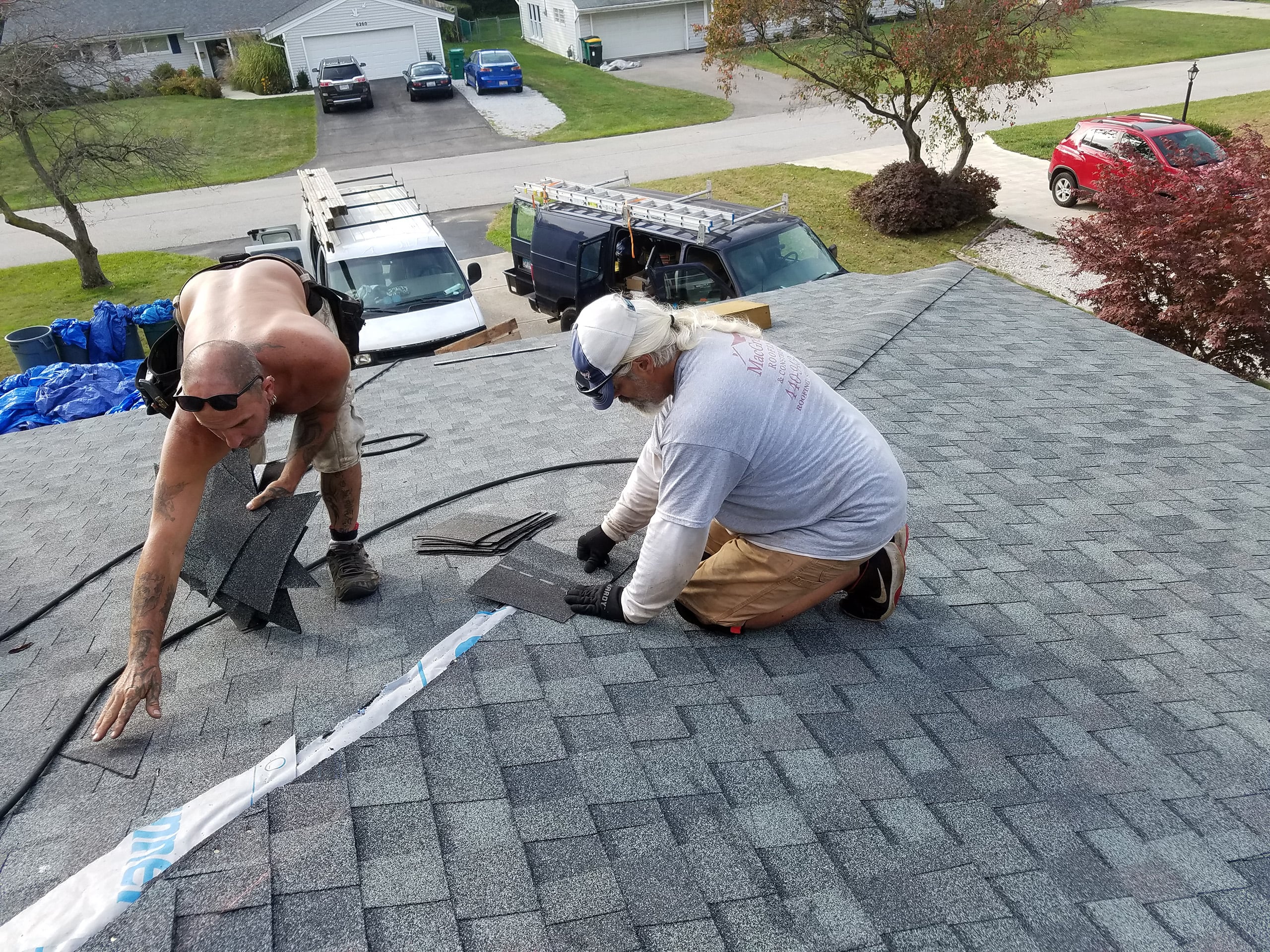
Proper shingle nailing involves placing nails in a designated line, typically marked by the manufacturer, and spaced correctly to ensure wind and water resistance. Use at least four nails per shingle, placed in the upper part of the shingle, above the adhesive strip, and about 1 inch from each edge and above each cut-out or “tab.” In high-wind areas, use six nails, adding two more between the standard points. Avoid placing nails too high, too low, or in the drip groove, as this can lead to leaks, shingle blow-offs, or other damage.
Nail Placement Guidelines
Location: Place nails in the “common bond” or “nailing strip,” which is a specific area on the upper portion of the shingle, usually marked by the manufacturer. This is a reinforced area built to withstand the force of the nail.
Height: Nails should be placed just below the adhesive strip, above the self-sealing strip, and within the designated nailing zone.
Spacing:
- Standard Nailing: Use four nails per shingle, placed approximately 1 inch from each edge and centered above each tab or cutout.
- High-Wind Nailing: In areas prone to high winds, use six nails per shingle, adding two additional nails between the standard ones.
Avoid:
- Drip grooves: Do not place nails in the drip groove, as this can cause leaks.
- High nailing: Avoid placing nails too high in the shingle (in or above the self-sealing strip), as this can compromise the seal and lead to blow-offs.
- Edge nailing: Do not nail too close to the edge, as the shingle can tear or the nail can pop out easily.
Nailing Technique
- Flush is best: Drive nails straight so the head is flush with the surface of the shingle, but not so deep that it cuts into the shingle material.
- Underdriven nails: If a nail is underdriven, tap it down so it is flush. If this is not possible, replace the shingle.
- Overdriven or crooked nails: Remove the nail, fill the hole with asphalt roof cement, and drive a new nail in a nearby spot.
Important Considerations
- Manufacturer’s instructions: Always refer to the specific installation instructions provided by the shingle manufacturer, as recommended placement can vary by product.
- Local codes: Check your local building codes, as they may have specific requirements for nailing patterns.
- Warranty: Following the correct nailing pattern is crucial for proper installation and to ensure the shingle manufacturer’s warranty remains valid.